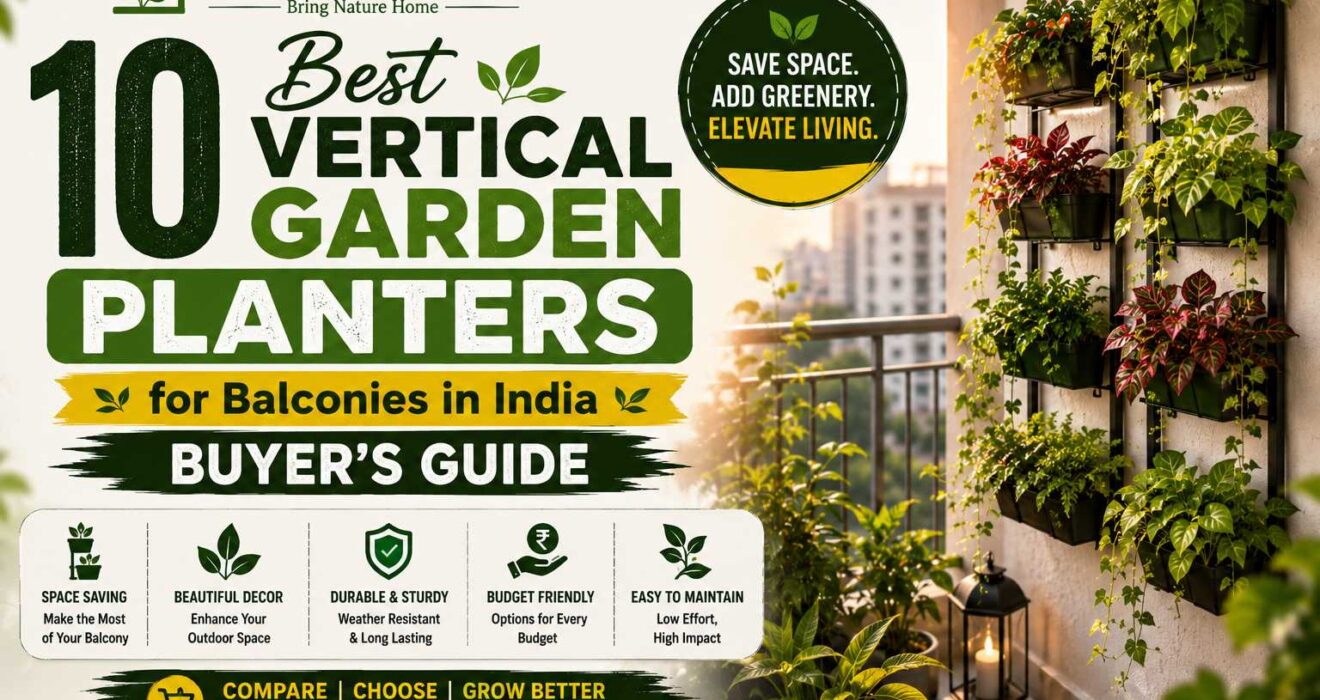
A lush, green balcony is a dream for many Indian apartment dwellers. But when floor space is at a premium, the only way to grow is up. This is where vertical garden planters transform from a simple accessory into an absolute necessity. They don’t just hold your plants; they define the aesthetic, functionality, and health of your small-space garden.
With a dizzying array of options available online and in local nurseries, choosing the right one can be overwhelming. Should you go for a modular wall panel or a simple railing planter? Is felt better than plastic? This comprehensive buyer’s guide to the best vertical garden planters in India will break down everything you need to know to make the perfect choice for your balcony.
How to Choose the Perfect Vertical Planter: 4 Key Factors
Before diving into the specific types, let’s establish the criteria that matter most for an Indian balcony.
- Material & Durability: Your planter’s material dictates its lifespan. India’s harsh summers, heavy monsoons, and dust demand robust choices.
- Plastic (PP/ABS): Lightweight, affordable, and often UV-stabilized to prevent cracking. Excellent for beginners. Ensure it’s high-quality, food-grade plastic if you plan to grow edibles.
- Metal (Galvanized Iron/Steel): Incredibly durable and ideal for modern decor. Rust-resistant coating is non-negotiable, especially in coastal cities like Mumbai or Chennai.
- Felt/Fabric: Highly breathable, which promotes excellent root health and prevents overwatering. However, they tend to dry out very quickly in peak Indian summers and may need more frequent watering.
- Terracotta/Ceramic: Classic Indian choice, naturally porous and keeps roots cool. The downside is they are heavy and can break easily, making them suitable only for sturdy, tiered floor stands.
- Wood: Aesthetically warm and rustic. Look for treated sheesham or bamboo, but be prepared for regular maintenance to prevent warping in the monsoon.
- Size & Depth: The volume of soil dictates which plants you can grow. Shallow 4-5 inch pockets are perfect for herbs, succulents, and microgreens. You’ll need deeper 8-12 inch planters for root vegetables, flowering annuals, or larger foliage plants.
- Drainage & Watering: This is the single most critical factor. Every planter must have drainage holes. For wall-mounted options, ensure the design channels excess water away from your wall to prevent dampness and seepage. If you travel often, consider planters compatible with self-watering systems.
- Installation & Weight: A vertical garden filled with wet soil is heavy. You must honestly assess your wall (concrete vs. drywall), railing strength, and whether you are a tenant with drilling restrictions. Many modern planters now use adhesive hooks, tension rods, or saddle mounts to avoid permanent installation.
Top 10 Types of Vertical Garden Planters (With Price Comparison)
Here, we categorize the best vertical planter systems available in the Indian market, complete with a buyer-friendly comparison.
| Planter Type | Best For | Key Material | Approx. Price Range (India) | Maintenance Level |
|---|---|---|---|---|
| 1. Modular Wall Panels | Permanent green wall, serious gardeners | UV-Stabilized Plastic | ₹800 – ₹3,500 (for a 9-12 pot setup) | Medium |
| 2. Railing Planters | Instant balcony makeover, zero-floor space | Metal or UV Plastic | ₹150 – ₹600 per piece | Low |
| 3. Hanging Pocket Bags | Renters, budget gardens, herb walls | Breathable Felt/Fabric | ₹500 – ₹1,200 | Medium (frequent watering) |
| 4. Stackable Vertical Towers | Growing 10+ plants, edible gardens | Lightweight Plastic | ₹900 – ₹2,500 | Low to Medium |
| 5. Tiered Plant Stands | Versatile decor, showcasing mixed pots | Iron, Bamboo, or Wood | ₹600 – ₹3,000 | Low |
| 6. Hanging Pots & Macramé | Boho decor, trailing plants | Ceramic/Plastic + Jute/Cotton | ₹200 – ₹800 per hanger | Low |
| 7. Magnetic/Suction Planters | Kitchen herbs, ultra-minimalist | PP Plastic + Strong Magnets | ₹300 – ₹900 | Low |
| 8. Ladder Planters | Rustic look, lean-to design | Treated Wood or Bamboo | ₹1,500 – ₹4,000 | Low |
| 9. Trellis-Integrated Boxes | Climbers and creepers, privacy screen | Metal or Wood + Planter Box | ₹1,200 – ₹3,500 | Medium |
| 10. Hydroponic Vertical Systems | Tech-savvy gardeners, soil-free growing | Food-Grade Plastic | ₹3,000 – ₹10,000+ | Medium to High |
1. Modular Wall Panels
These interlocking panels are the gold standard for creating a dense “living wall” on your balcony. They consist of a backplate that mounts to the wall and individual pots that slot in, often with a built-in drip irrigation channel to water all pots from the top. They are perfect for Indian balconies where you want to cover an entire wall with a mix of ferns, pothos, and small flowering plants. Brands like Bio Blooms and Smart Garden offer sturdy plastic panels. A 9-pot setup can cost between ₹800 and ₹1,500, while a premium 24-pot system can be upwards of ₹3,000. These are an integral part of the services we discuss in our detailed guide on the benefits of natural vertical gardens, where the focus is on creating an ecological and aesthetic statement.
2. Railing Planters
For a near-instant, no-fuss balcony garden, railing planters are unbeatable. These saddle planters sit securely on your balcony railing, using zero floor space. Indian brands like Ecofynd and Heaven Decor offer metal versions with rust-resistant coating and drainage holes, typically priced from ₹150 to ₹600 per piece depending on size and material. They are brilliant for creating a vibrant border of marigolds, petunias, or a continuous hedge of money plants. As we highlight in our section on plants and planters, choosing the right vessel is key to transforming your outdoor area’s ambiance.
3. Hanging Pocket Bags
A renter’s best friend and the ultimate budget choice, these felt or fabric organizers have multiple pockets and can be hung from a few sturdy nails or hooks. The breathable material is excellent for the roots, making them ideal for herbs like mint, basil, and ajwain. A 12-36 pocket bag can cost as little as ₹500 to ₹1,200. The trade-off? They can look untidy if overgrown and will need watering almost daily during May and June. The concept of a lush, space-efficient vertical garden using such planters is beautifully complemented by the design principles we share for natural vertical gardens.
4. Stackable Vertical Towers
Imagine a central pole with tiered pots stacked one above the other, taking up the footprint of a single pot. These towers are phenomenal for growing a lot of edible plants—strawberries, lettuce, coriander—in a tiny area. A 5-tier planter can house 15-20 plants. Look for brands like POTS4NATURE or Amazing Creation, with prices ranging from ₹900 to ₹2,500 for a 5-tier stack. The tiered design allows each level to get good sunlight without the upper plants completely shading the lower ones, a crucial design factor for Indian balconies.
5. Tiered Plant Stands
This option offers the most flexibility as it’s essentially a vertical shelf for your existing pots. You can place any mix of ceramic, terracotta, or plastic pots on these stands, creating a layered, dynamic display. Available in sturdy iron, classic sheesham wood, or eco-friendly bamboo, a 3-4 tier stand can cost between ₹600 and ₹3,000. This solution is perfect for those who love rearranging their plant family, an ethos that aligns perfectly with the versatility offered by our diverse plants and planters services.
6. Hanging Pots & Macramé
Draw the eye upward with suspended pots. Cotton or jute macramé hangers, combined with a simple ceramic or plastic pot, are very affordable (₹200-₹800 per set) and add an instant bohemian charm. They are perfect for corners where you can hang them from a sturdy ceiling hook. This method works best for cascading plants like spider plants, chlorophytum, or the beautiful money plant, creating a soft, vertical curtain of green.
7. Magnetic/Suction Planters
These are the ultimate space hack for truly tiny balconies that double as a kitchen extension. Small magnetic pots can cling to the refrigerator or any metal surface, while heavy-duty suction cup planters can adhere to windows or tiles. They are ideal for growing a mini herb garden basil, oregano, and thyme—right where you cook. A set of 3-6 can cost between ₹300 and ₹900. Maintenance is a breeze as they can be easily detached for watering and cleaning.
8. Ladder Planters
A leaning ladder with built-in planter boxes or shelves brings a rustic, cottage-core feel to an apartment balcony. Bamboo ladders are particularly popular in India for their light weight and natural resistance to elements. A 4-5 tier ladder planter with boxes can cost between ₹1,500 and ₹4,000. The angled design ensures each tier receives ample sunlight without the need for precise spacing.
9. Trellis-Integrated Planter Boxes
If your balcony needs a touch of privacy from neighbors or you wish to hide an unsightly AC outdoor unit, this is your solution. It combines a deep planter box at the base with a metal or wooden trellis attached at the back for climbers to grow on. Plant a dwarf bougainvillea, jasmine, or a fast-growing money plant, and watch them weave a beautiful, natural privacy screen within a few months.
10. Hydroponic Vertical Systems
For the tech-inclined, these soil-free, water-based growing systems are the future of vertical gardening. Automated smart gardens regulate light and water, allowing you to grow exotic lettuces and herbs with remarkable speed. While a premium option (ranging from ₹3,000 to ₹10,000+), they are mess-free and exceptionally water-efficient, a compelling advantage in water-scarce Indian cities. The innovation of such a system mirrors the kind of transformative home decor we explore in our article on benefits of natural vertical gardens.
Care & Maintenance: Keeping Your Vertical Garden Thriving
Selecting the perfect planter is just the beginning. The Indian climate presents a unique set of challenges, but with these tips, your vertical garden will remain a vibrant focal point.
- Watering Wisdom: Unlike ground pots, vertical planters drain and dry out fast. In the scorching Indian summer (April-June), you may need to water your wall-mounted and railing planters twice a day. The best time is early morning and after sunset to minimize evaporation.
- The Monsoon Check: Just before the monsoon, inspect all your planters. Ensure drainage holes are unclogged so that torrential rains don’t waterlog the soil and rot the roots. A preventative neem oil spray every 15 days during the humid months will keep fungal diseases at bay.
- Dust and Shine: City dust is a reality. It settles on leaves and blocks sunlight, hindering photosynthesis. Gently wipe broad leaves with a damp cloth weekly and give delicate ferns and foliage a fine misting shower.
- Pruning for Fullness: A neat vertical garden is a beautiful one. Regularly pinch off the growing tips of your herbs and leggy flowering plants. This encourages bushier, denser growth, making your vertical display look lush and intentionally curated rather than scraggly.
Ready to Go Vertical? Explore More From Vertical Gardening India
Your journey to a greener balcony doesn’t stop with the perfect planter. Dive deeper into the world of vertical gardening with our expert guides, designed to help you create and maintain the lush, serene space you’ve always dreamed of.
- What are the benefits of Natural Vertical Garden? – Discover the powerful, life-enhancing advantages of a living wall, from purifying the air you breathe to creating a calming sanctuary.
- What is a Natural Vertical Garden? – New to the concept? This comprehensive guide breaks down the what, why, and how of integrating a living wall into your home.
- Explore Our Plants & Planters – Looking for the perfect plants to put in your new planter? Explore our curated selection and get expert advice on creating a harmonious green space.
- Natural Vertical Garden Services – Ready to take the next step? Discover how our custom-designed natural vertical gardens can transform your balcony into a bespoke living masterpiece.
- Creepers & Shrubs for Your Vertical Garden – The right climber can define your vertical garden. Explore our collection of creepers and shrubs that add texture, color, and a natural privacy screen.